
Centrifugal Separation Equipment
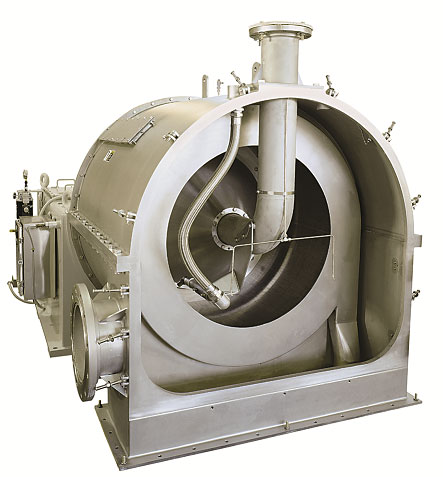
Cream from milk. Sand from gravel. Oil from water. Pigment from paint. B&P Littleford is a centrifugal separator manufacturer for many types of industries.
Only by undergoing precise separation can thousands of products used by millions of people every day reach their full potential. B&P Littleford designs, develops and delivers high-performing, long-lasting centrifugal separation equipment ideal for your exacting separation needs and most demanding applications.
B&P Littleford’s horizontal and vertical centrifugal separation equipment is expertly engineered, precisely manufactured, and rigidly tested to effectively and efficiently separate liquids from solids, liquids from other liquids, and gases from solids.
What is a centrifugal separator?
Centrifugal separator machines use gravity and mechanical means to separate compounds. Centrifugal separators can separate:
- Liquid-liquid mixtures
- Solid-liquid suspensions
- Gas/liquid-solid mixtures
- Other particles by specific gravity
Centrifugal separator machines feature an inlet, outlet, and separator. The liquid-solid, solid-liquid, or gas-solid mixture is pumped into the separator. The separator creates a spinning vortex, which filters solids from liquids.
The separated solids collect at the bottom of the separator and discarded. High-density liquid, such as water, flows out of the separator. Low-density components, like oil, remains inside the centrifugal separation machine.
Centrifuge Separator Manufacturer
B&P Littleford is a centrifugal separator manufacturer and we supply the ideal centrifugal separation equipment for your most demanding applications.
B & P Littleford’s durable, reliable centrifugal separation equipment is ideal for a wide variety of industrial uses:
- Environmental processes
- Plastic manufacturing
- Chemical purification
- Mineral and ore production
- Pharmaceutical manufacturing
- Biotechnology
- Food and beverage production
- Processing sugar
- Making fruit and vegetable juice
- Refining vegetable oils
- Producing wine and beer
- Purifying mineral fuel and lubricating oils
Podbielniak® Contactor (POD®)
B&P’s Podbielniak® Contactor (POD®) is a horizontal axis liquid-liquid centrifugal extractor that processes liquids for accelerated solvent extraction. The two main functions of this machine are liquid-liquid separation and the liquid-liquid extraction process through counter-current flow.
B&P’s Podbielniak® Contactor (POD®):
- Reliable: POD® has been in service for more than 60 years
- Runs smoothly: Uses a dual bearing lubrication system - one for normal operation, one for flush cleaning
- Durable: Lower operating rpm means rotating parts last longer
- Easy to clean: Rotor elements use Asco tubes and Ferralium alloy liners
- Sturdily construction: Made of 316 stainless steel. Non-contact parts and attachments in 304 stainless steel and chrome
Pusher Centrifuge
B&P Littleford's Pusher Centrifuges (liquid-solid separation centrifuges) relentlessly separate coarse solids from free-draining crystalline slurries in the most extreme conditions. The impressive reliability record for Pusher Centrifuges is grounded in its sound design, precise engineering, and top-grade construction.
Pusher Centrifuges are developed and manufactured for standard products but can be customized for special or difficult solid separation applications.
B&P Littleford Pusher Centrifuges feature:
- Single-piece reversible wedge-slot screen that efficiently separates solids and liquids
- Screen supported by a centrifugally cast, milled-slot cage basket
- Heavy-duty bearings carry the main hollow shaft, which drives the basket
- Belt-driven hydraulic pump for energy efficiency, safety and reliability
- Internal, self-contained hydraulic piston driving the pusher shaft
- Rugged base provides rigid support for the entire rotating assembly
- Cooling coils that maintain the hydraulic system temperature at optimum levels
Delivering the service you need
B&P Littleford designs, develops, and delivers a wide range of mixing, drying, compounding, reacting, extracting, and horizontal & vertical centrifugal separation equipment for many different manufacturing applications.
- More than 100 years’ industry experience
- Quality products built to last
- Responsive service and support
- Professional, knowledgeable staff
- Top-notch testing facilities
Frequently Asked Questions
Why are centrifugal separators used in industrial processes?
Centrifugal separators achieve fast, controlled separation where settling tanks or gravity-based methods fall short. Centrifugal force accelerates separation by density, which improves throughput, consistency, and product purity across demanding industrial processes.
What materials can centrifuge separators separate?
Our centrifuge separators handle numerous materials based on density differences, including immiscible liquids, suspended solids, crystalline slurries, and emulsions. Common separations include oil from water, solids from process liquids, and liquid phases during solvent extraction.
Can centrifugal separators operate continuously?
Yes. Many of our centrifuge separators offer continuous operation, which suits high-throughput manufacturing environments that require steady performance without frequent shutdowns.
How does centrifugal separation differ from filtration?
Centrifugal separation relies on rotational force rather than a filter medium. This approach avoids clogging issues, handles fine particles effectively, and maintains steady operation in continuous processing environments where filters struggle.
What industries rely on oil and water centrifugal separators?
Oil and water centrifugal separators play a critical role in oil and gas operations, petrochemical processing, wastewater treatment, and industrial cleaning systems. We design equipment that separates free and dispersed oil from water streams under varying flow and temperature conditions.
Can centrifuge separators clean water?
Centrifuge separators remove suspended solids, oil, and other contaminants from water streams. While they do not replace final polishing steps, they significantly reduce contaminant load and improve downstream treatment efficiency in water and wastewater systems.
What is a liquid extraction centrifuge?
A liquid extraction centrifuge transfers targeted components from one liquid phase to another through centrifugal force and controlled contact. Our Podbielniak® Centrifuge operates as a liquid extraction centrifuge that supports counter-current flow for efficient phase transfer.
How does a centrifuge extractor improve solvent extraction?
A centrifuge extractor increases interfacial contact between liquid phases while maintaining precise phase separation. This method improves extraction efficiency, shortens processing time, and maintains stable operation during continuous production.
What types of centrifugal separation equipment do you manufacture?
We manufacture horizontal and vertical centrifugal separation equipment, including liquid-liquid centrifugal extractors and liquid-solid separation centrifuges. Each system matches specific process requirements, material characteristics, and operational conditions.
What factors determine the right centrifugal separator for an application?
Material density difference, particle size, flow rate, temperature, and chemical compatibility guide equipment selection. We evaluate each application to match separation performance with mechanical design and operating parameters.
How does a liquid-solid separation centrifuge work?
A liquid-solid separation centrifuge uses rotational force to move solids outward while clarified liquid exits through designated outlets. This approach handles high solids loading and continuous operation without frequent intervention.
What is a centrifugal divider used for?
A centrifugal divider controls phase boundaries inside the separator. It directs separated liquids to the correct discharge points and maintains stable separation during changes in flow or density.
How does centrifugal separation support pharmaceutical and biotech production?
Centrifugal separation supports clarification, recovery, and purification steps where precision matters. Our systems maintain repeatable separation while meeting material and cleanliness requirements common in regulated production environments.
How does centrifugal force improve separation speed?
Centrifugal force multiplies gravitational acceleration, which causes heavier components to migrate outward rapidly. This force shortens separation time and improves consistency compared to gravity-based methods.
What determines separation efficiency in a centrifugal separator?
Separation efficiency depends on density difference, rotational speed, residence time, and internal flow control. We design each centrifuge separator so centrifugal force, geometry, and discharge paths work together to maintain stable separation under real process conditions.
Can centrifugal separators handle emulsified oil and water mixtures?
Yes. Centrifuge separators can separate emulsified oil and water when sufficient density contrast exists and operating conditions allow droplets to coalesce during rotation. We engineer oil and water centrifugal separators to manage flow rate, shear, and residence time to improve phase clarity.
How does temperature affect centrifugal separation performance?
Temperature influences viscosity and density, which directly affect separation behavior. Higher temperatures often improve flow characteristics, while lower temperatures increase resistance. We account for operating temperature during equipment selection and design.
What maintenance considerations apply to industrial centrifuge separators?
Proper lubrication, inspection of rotating components, and monitoring discharge paths help maintain long-term performance. Our centrifugal separation equipment uses durable materials and proven mechanical designs to reduce downtime in continuous service.
Are centrifugal separators suitable for hazardous or corrosive materials?
Yes. We select construction materials and internal components based on chemical compatibility and process conditions. This approach allows our centrifuge separators to operate safely in chemical, petrochemical, and solvent-based applications.
How do centrifugal separators manage changes in feed composition?
Centrifugal separators respond well to variations in solids content or liquid density when designed with stable internal flow control. Features such as centrifugal dividers help maintain consistent phase separation as operating conditions shift.

Pod Centrifuge
B&P’s Podbielniak® Contactor (POD®) is a horizontal axis centrifuge that processes liquids in solvent extraction.
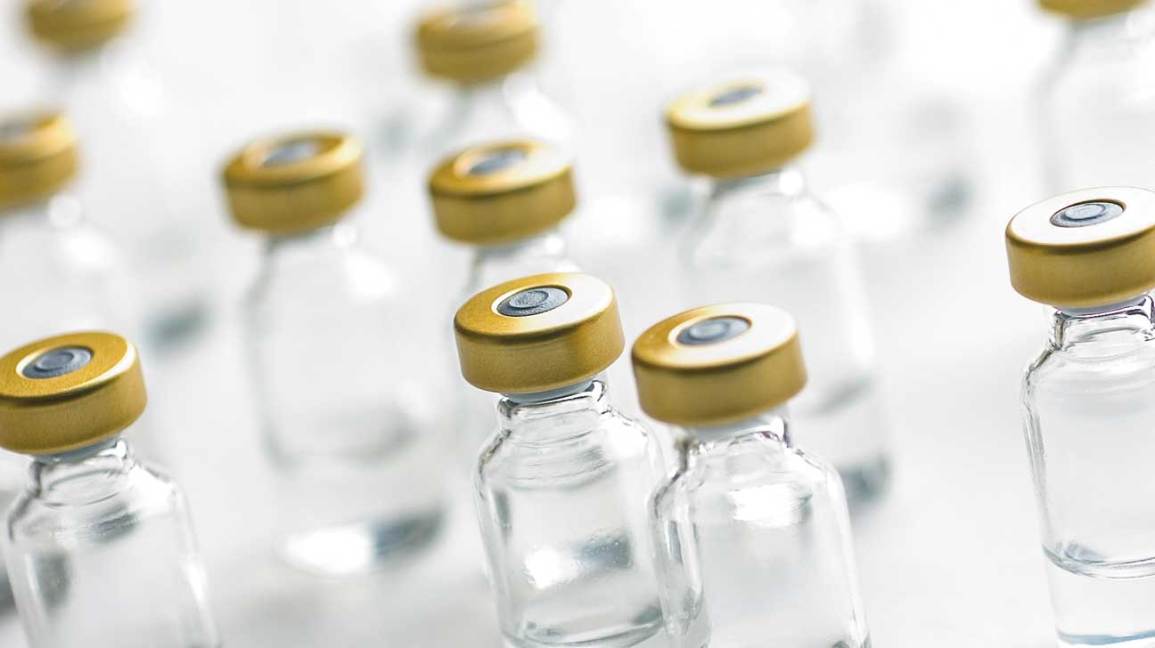
Liquid Liquid Extraction
Some examples of the countless processes that can be done by our machines.

Pusher Centrifuge
B&P Littleford Pusher Centrifuges are known for relentless productivity in separation of coarse solids from free-draining crystalline slurries.
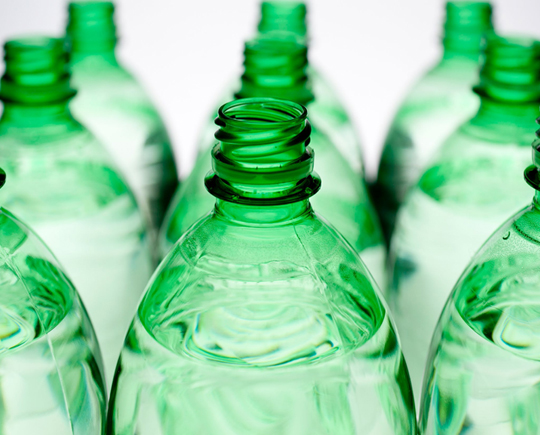
Liquid Solid Separation
Some examples of the countless processes that can be done by our machines.
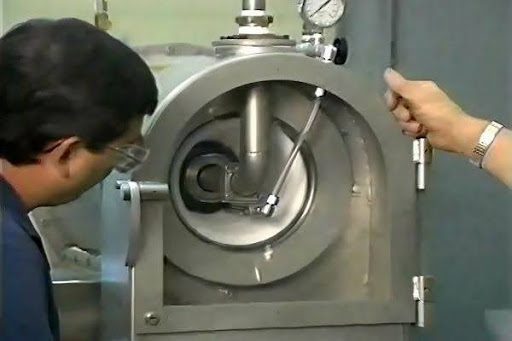
Gas/Liquid Solid Separation
Some examples of the countless processes that can be done by our machines.